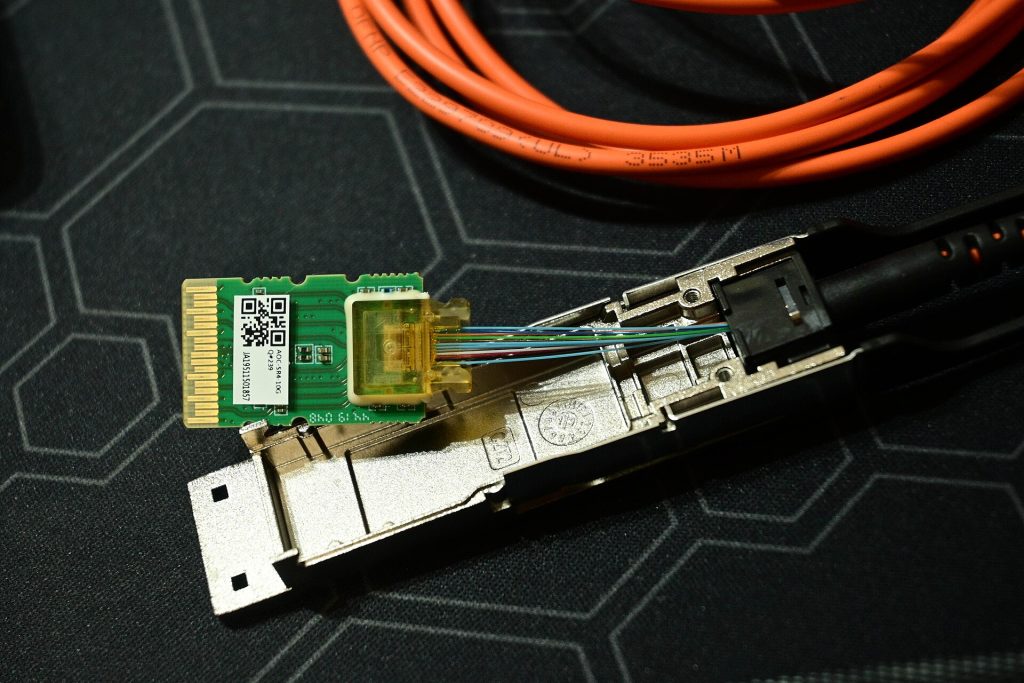
The Trump administration plans to press ahead with restrictions on imports of new Chinese optical transceiver models, despite lobbying against them by Amazon, Google, Meta and other large US technology companies, Reuters reported on 17 November 2026, citing people familiar with the discussions.
Amazon, Google, Meta, CoreWeave and Cisco joined Microsoft in pressing White House officials over the plan, Reuters said. The report added that the plan could still be shelved.
Optical transceivers are small plug-in devices that turn electrical signals into light and back. They carry data over fibre links between servers and switches in data centres.
Chinese manufacturers supply nearly two-thirds of the world’s data-centre optical transceivers by volume, Counterpoint Research estimated in an analysis published on 4 August 2026. That is why the scope of any restriction matters to US cloud companies.
Executives told officials that complying could take up to a decade, according to Reuters. That is an industry estimate, not an agreed transition period.
Suppliers are also flagging the risk. US maker Lumentum said in a quarterly filing on 3 November 2026 that restrictions affecting its products, suppliers or customers could force changes to components or manufacturing.
That could raise costs or delay deliveries, the company said. The filing describes a possible risk, not disruption that has already happened.
Reuters had reported on 4 August 2026 that the Federal Communications Commission (FCC), the US telecoms regulator, was drafting restrictions on imports of new Chinese transceiver models. The November report describes that plan continuing despite opposition from buyers.
The FCC separately published a broader equipment-authorisation proposal on 7 August. It weighs whether curbs should depend on who makes equipment or where it is made. That distinction matters for suppliers with manufacturing operations in Thailand, in Southeast Asia.
InnoLight says its Thai manufacturing plant was established in 2019. Eoptolink’s 2023 annual report lists a wholly owned manufacturing subsidiary in Thailand. Those operations do not establish whether Thai-made products would be exempt from the reported restrictions.
A separate Senate bill, S.5548, introduced on 24 September, addresses federal procurement for national security systems rather than commercial imports. Under the introduced text, the optical-transceiver restrictions would begin five years after enactment. Southward Tech reported on the bill in September.
The next signal to watch is whether the FCC publishes a final rule, and which transceiver models and factory locations it covers.
Key questions
What is the status of the reported curbs?
Reuters reported on November 17, 2026 that the plan is advancing but could still be shelved. The report is not an implementation notice.
Why do US cloud companies care?
Chinese manufacturers supply nearly two-thirds of the world’s data-center optical transceivers by volume, according to Counterpoint Research.
Would manufacturing in Thailand provide an exemption?
The FCC’s broader August 7 proposal considers both manufacturer identity and production location. It does not establish a Thai exemption from the reported transceiver plan.
Is S.5548 the same measure?
No. The cited introduced text concerns federal procurement for national security systems, not commercial imports. Its transceiver provisions would begin five years after enactment.