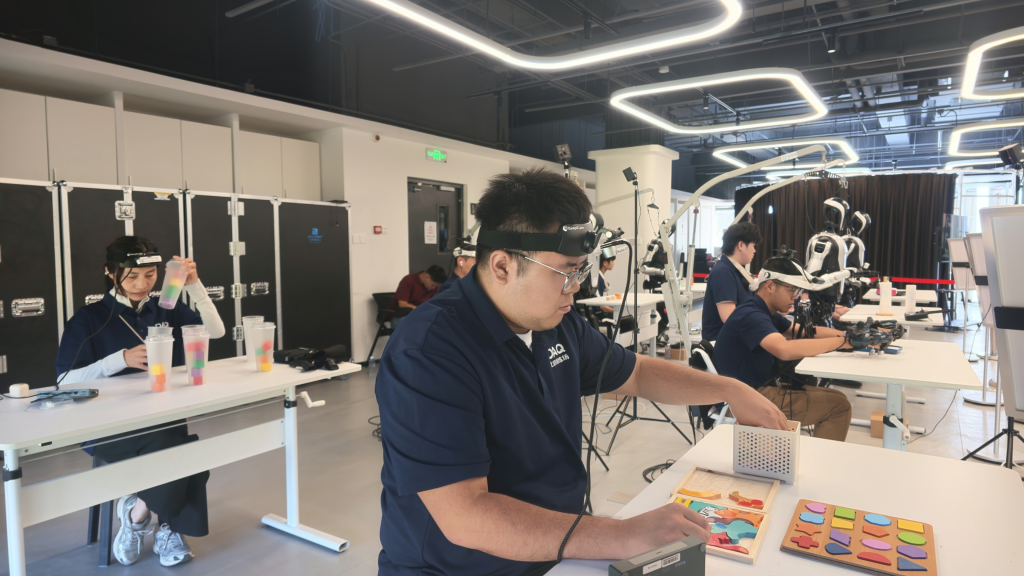
At Pearl Global’s garment factory in Gurugram, just outside Delhi, workers were handed head-mounted cameras in early April. One worker told the Indian news site Scroll they were supposed to wear them from 10am to 4pm. Each camera’s serial number was logged alongside the wearer’s factory ID.
A manager might watch a seam being sewn to see how long it takes. Scroll reported that Egolab, a data supplier, offered factories reports on how workers spent their time. A robotics engineer might watch the same seam to see which hand steadies the cloth when it slips.
That kind of skill helps explain India’s appeal to robot makers. A lab looking for a particular skill needs a supplier who knows where to film it. The Indian startup publication Inc42 reported that India was Human Archive’s largest collection hub. Co-founder Rushil Agarwal pointed to the range of trades his team could reach there, from jewellery to steel.
The gig-work platform Awign could record up to 1,000 hours a day in India, Inc42 reported in July. For another supplier, Humyn Labs, most footage of household chores came from Brazil, The Economic Times reported in April. Ranking countries would mean knowing how many hours buyers actually kept from each.
Consider the free sample assembled by xPhi Robotics. The company selected 100.1 hours of recordings from 152 workers at eight sites in Bengaluru and Ahmedabad. The dataset lists 12.5 hours for each of eight trades. A lab can see how a diamond is polished or how a weaver fixes a defect at the loom.
Even those 100.1 hours include stretches when a lens was blocked or a worker took the camera off. xPhi is adding computer-generated labels in batches. The labels describe what workers do and skip the unusable stretches. It also invites labs to request custom recordings.
In May, TechCrunch reported that Human Archive paid workers a base rate of $1 an hour to take part in recording. To prepare the footage for sale, the company tracks hand movements and checks recording quality.
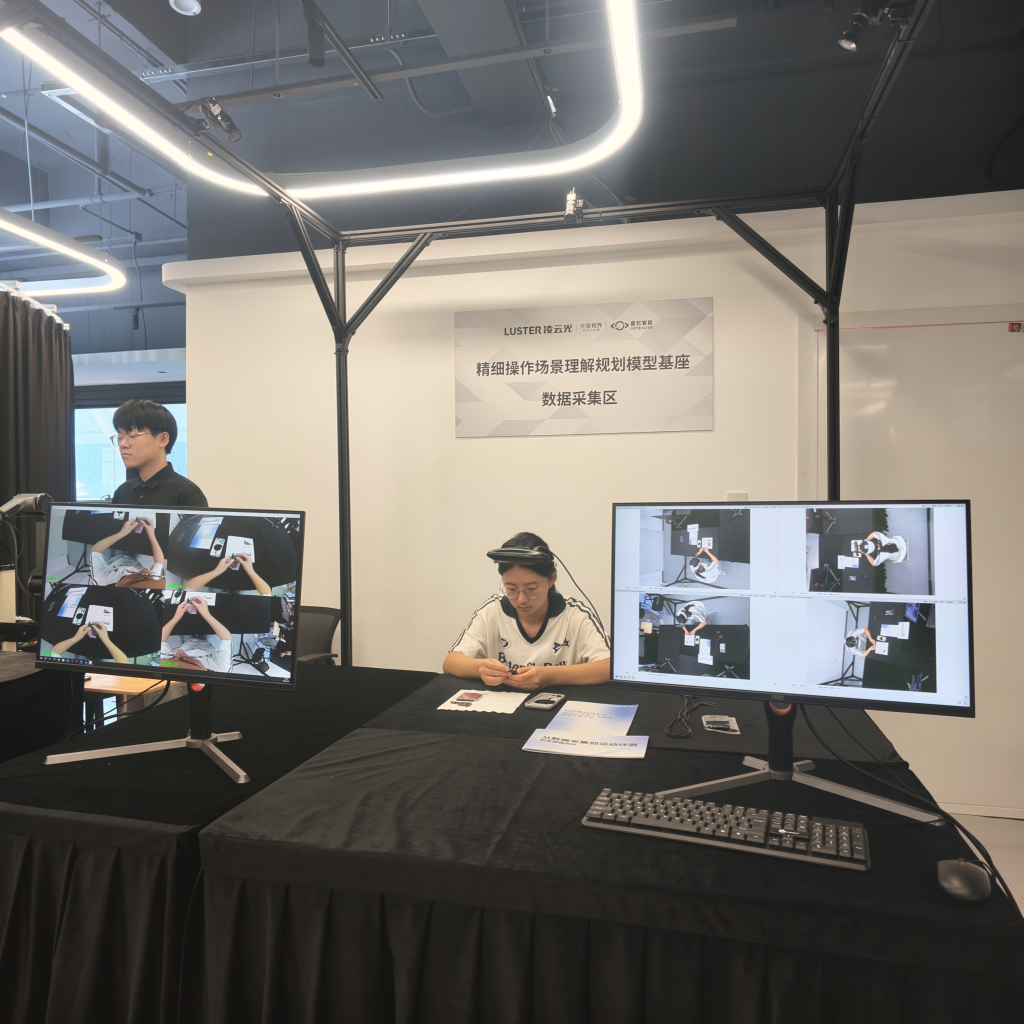
In July, Inc42 put the price of data sold to robotics labs at $15 to $50 an hour, from unlabelled video to annotated recordings matched with other sensor readings. To work out a supplier’s margin, you would need to know how many paid hours and how much processing went into each hour a buyer accepted.
One buyer decided to collect its own footage. The US humanoid-robot maker Figure said in August that outside suppliers could not deliver enough footage of the variety and quality it wanted. It built its own collection app, Index, and had paid contributors $15 million by then. It discards clips too similar to ones it already has.
For a September test in 30 unfamiliar homes around San Francisco Bay, Figure gave two versions of its robot’s control software the same training on the tasks. The version trained from scratch succeeded 9% of the time. The one trained first on Index recordings succeeded 56% of the time.
To pass the tidying task, the robot had to put every toy in the basket. The test measured what training on the whole collection added. Figure did not say how much of that footage came from India.
What happens to the person behind the camera when a clip is rejected? One answer comes from the Minute app’s terms, effective 2 October, which name Figure AI as the contracting party. They give individual contributors base pay on submission, even for a rejected clip, except in cases of confirmed fraud. An accepted clip may earn a bonus.
When someone records as part of their usual duties for a participating employer, the employer sets their pay. Figure owes those workers no direct payment under the Minute terms. The terms do not say whether the same rules apply to Index.
Back at Pearl Global, workers told Scroll they had given neither written nor verbal consent. Asked about that factory, Arnav Kabra, Egolab’s head of business operations, said Egolab had obtained consent to use the device. He did not say how. Scroll did not identify a buyer for those recordings.
xPhi says it recorded every participant’s consent. In Gurugram, the camera log could tell you who was at the sewing machine. It could not tell you whether that worker had agreed to help train a robot.